Kindermusik of Lincoln NE Nebraska
Music & Movement classes for children
MARK YOUR CALENDARS!!! The 2024 Summer Camps & Classes schedule is LIVE. Current Kindermusik of Lincoln families can enroll now with early enrollment access to all Summer Camps & Classes. The general public is invited to enroll beginning March 24, 2024.
There is six-weeks of camps/classes over a 7-week period, beginning in mid-June. We take a week off to observe the 4th of July holiday. Camps start the week of June 10, 2024.
Themes are as follows for the age groups indicated below with anticipated multiple class day/time options for each:
Level 1: FAMILY ALL AROUND, 40-minute class for children 0-18 months, once a week with an adult caregiver.
Level 2: ZOO TRAIN, 40-minute class for children 19 months-3 years, once a week with an adult caregiver.
Music & Art: HOORAY FOR A CARNIVAL & PARADE! 90-minute class for children 3-6 years, once a week, caregivers join last 5-10 minutes.
Junior Chef: JUNIOR CHEF, 90-minute class for children 3.5 years – 6 years, once a week, caregivers join last 5-10 minutes for recipe reveal.
Master Chef: MASTER CHEF, 2-hour class for children 6.5 – 10 years of age, once a week, caregivers join the last 5-10 minutes for recipe reveal. Having participated in Junior Chef previously is not a requirement but I do find it helpful to the kids!
New this year: A week of age appropriate Kitchen Creativity for both Junior and Master Chef Camps. Kitchens aren’t just for cooking, y’all!
You’ve been asking and finally the 2023 Summer Camps and Classes are live and now available for enrollment on this site!
By clicking on the the 2023 Summer Camps and Classes link on the right hand side of this page you’ll see a list of only the summer offerings. All the fun begins on Thursday, June 15. We will not have classes From Thursday, June 29 through Wednesday July 5th in observance of the 4th of July holiday. Classes will resume on Thursday, July 6.
Because of the tremendous price increases of required supplies over the last 12 months for the following three camps: Art & Music Camp, Junior Chef, and Master Chef, I did find a need to raise the weekly cost by between 5-10%. Across the board my supply costs have risen anywhere from 5-25% dependent upon so many factors as I am sure you are well aware. I am trying so hard to remain competitive and still pay myself a wage. As always, I appreciate your understanding and grace in this situation.
If you have ANY TROUBLE enrolling on the site, please reach out via text/call at 402-770-1486 and I will be happy to assist you! Can’t wait to see you for our Summer Adventures!
Yep, believe it or not, it’s time to start looking at those school year calendars, besides the fact that it feels like summer has just begun! Kindermusik of Lincoln School Year classes start on Tuesday, September 6th. Enrollment is now open, please use the 2022-2023 School Year link to the right to open and view the schedule. It should be noted that while the schedule is very similar to last years, there have been some minor changes and adjustments. It’s especially important to note that there MAY be additional changes or tweaks to the schedule as the time nears for classes to begin. Any adjustments will be communicated in as timely a manner as possible.
As always, if you have any questions, please feel free to reach out to Ms. Shawna via text/call at 402-770-1486.
The summer schedule is up! It’s six weeks full of great offerings for children ages 0 to 9 years being held from June 20 – August 6, 2022. Classes are again being offered on Tuesdays, Wednesdays, Fridays, and Saturdays this summer. The week of July 4-9 will be planned week off to allow families to travel and celebrate the Independence Day holiday. Classes will resume as scheduled on Tuesday, July 12. The final week of classes ends on August 6, in time for LPS teachers to get back to their classrooms and start their school year.
Busy Days is the theme for the Foundations and Level 1 children. This curricula explores experiences from any typical day in the life of toddler, highlighting just how exciting these day to day activities really can be! Camp is once a week for 40 minutes for the enrolled child and their caregiver.
Zoo Days It’s as if this camp was written just for any child who has every had the joy of visiting the Folsom’s Children Zoo here in Lincoln, NE. Level 2 children will “ride” the Allee Allee O train all around the zoo and become familiar with all the most popular animals. This will be sure to become one of your most treasured shared camp memories! Class is once a week for 40 minutes for the enrolled child and their caregiver.
Road Trip is where it’s at for children enrolled in the Art & Music! They will travel along with the Flugelhorn family as they road trip from place to place, enjoying new experiences, sights, sounds, songs, and games. The first 45 minutes of the 75 minute class will be spent as a typical Kindermusik class focused on music and movement. The last 30 minutes will focus on our art/craft project. Parents will join us for the last 5 minutes for sharing time.
Junior Chef and Master Chef are by far the most requested camps year after year at Kindermusik of Lincoln.
Junior Chef uses music to teach children ages 3-6 years the importance of good nutrition. During the 75 minute camp they also learn to become active helpers in the kitchen which in turn encourages them to make healthy food choices, and more adventurous eaters! Kitchen supplies are provided the first week and will need to be brought back each week for the child to participate. Parents will join in the last 5-10 minutes to sample the recipes prepared during class time!
Master Chef is an intensive two hour camp that takes place in the kitchen and involves much more complex recipes each week. This camp is for children ages 5 to 9 years. Musical games, dances, etc may be used during times when we are waiting on our recipes to cook, but will not be the focus of this camp. Kitchen supplies are provided the first week and must be brought back each week for the child to participate. Oftentimes the recipes prepared during this camp will be coming out of the oven right at the time of pick up thus it is suggested to have hot pads and a cookie sheet in the car for Master Chef Camp day. Sometimes you may be asked to send a large container, etc to camp along with their normal supplies but this will be done the night before or the morning of camp so that you more likely to remember to send it along.
As before, the tuition portion of the cost of the camp can be adjusted AT THE TIME OF ENROLLMENT if you know that you will need to miss a week of class due to travel/other summer plans and a make-up class on another day is not an option. If you require prorated tuition, Enrollment must done over the phone at 402-770-1486, as there is not currently a way to handle it through website enrollment. Refunds for travel/missed weeks scheduled after enrollment will not be reimbursed or refunded.
Starting 3/27/2022 through Friday, April 8, 2022, you can receive $10 off each child’s enrollment with the code CAMP22 at check out.

Summer Camps and Classes are very special at Kindermusik of Lincoln! There are many good things being planned for your family this year, I am so excited to share them all with you. The schedule is still a work in progress and will (hopefully) be ready for enrollment on Sunday, March 27! Please be patient with me as I work to get it posted, error free. I appreciate all the interest in the upcoming Summer Camps and Classes Schedule I’ve received so far. Your patience as I figure out how to include additional days and class times is certainly appreciated.
I will add a post here once we are ready to rock n’ enroll!!!!
We are back IN PERSON which has been SO amazing! The connections, the smiles… it’s something we missed so much. Being new to or just now beginning in person with Kindermusik comes with some common questions from parents. These are questions we haven’t answered in a while, so we wanted to revisit this topic and see if we can reassure you that your child is thriving no matter their learning style.

Whether you are in our Kindermusik classes, another parent child class, or even getting back out there with playdates and social opportunities, you may be noticing that your child isn’t instantly jumping right in, or seemingly excited to be there. However, what you see on the surface many not be the entire story.
Children learn in so many different ways. Some learn by listening (auditory), some learn by moving (kinesthetic), and some learn by touch (tactile). Some children, especially in new environments may appear disinterested, when in reality, they might just be processing. Many times parents interpret this passive learning as their children not liking the class, activity, or experience. This might not be the case at all. In fact, when you go home, or when class ends and your child is back in their safe place, they might start showing you all that they learned. It’s quite amazing to see!
The best learning experiences are those that integrate the senses, learning domains, developmental needs, and interests of the child. For example, a great integrated activity might involve singing, language, imagination, listening, creativity, problem solving, and pretend play. This level of integration creates an optimal and meaningful learning environment for each child.
Preparing a safe and secure learning environment is a top priority. When in this type of environment, children are able to access the part of the brain which is responsible for learning and memory. With you by your child’s side, you are creating a safe, loving place to return to at any time. The key is making exploring and socializing an option, but not judging how or when your child may integrate in. Inviting them to join and participate at whatever pace they need without expectation is the best gift you can give as you both return to these kinds of activities.
I hope this eases your mind as you head back to an in-person experience.
School Year 2021 – 2022 class registration is ongoing. We know you’ll find an option that will be the perfect learning experience for your child Have questions? Just contact me @ 402-770-1486!
Wishing you all health and happiness this fall! Ms. Shawna

Worried about Covid? I am too! That’s why I am vaccinated. Studio policies will continue to be updated based on local levels of transmission and any directed health measures set in place by the Lincoln Lancaster County Health Department. We will be embracing masks, family areas, great air flow as well as continuing exceptional cleaning of all instruments & props. What HASN’T changed is the beautiful experience that is Kindermusik!
I remain committed to doing what is right in the moment as it presents itself. As the new mask mandate begins tomorrow, 8/26/21, Kindermusik of Lincoln will be in happy compliance. The current plan is to hold all classes outdoors as long as the weather allows (rainy day classes will be indoors in our normal classroom). Once the weather becomes too cold to comfortably be outside, classes will then be moved inside.
* If a class is taking place indoors, all persons coming, going, and attending classes inside the building, 2 years old and older will need to be masked, regardless of vaccination status.
* If a class is being held outdoors, based on current requirements by LLCHD and the CDC, masks will not be required as there is ample space to spread out and remain socially distanced. Of course, masks outdoors are always welcome and at your discretion.
I have learned so much this last year and yet, I continue to learn every single day. I have become more comfortable making changes and standing by decisions I make that are in the best interest of the precious folks, young and old, that grace my business doorsteps. I will remain unapologetically cautious. I believe that I have a responsibility to do my part in keeping my community safe while providing a safe option for children to continue to learn, socialize, and grow. As of right now, the plan to start classes on Tuesday, September 7 remains in place.
As always, please feel free to reach out with any questions or concerns. You are my partners in making safe decisions, and I value your input. Please know, I appreciate all of you very, very much. You and your children provide so much joy and excitement to my world!!!
Hugs,
Ms. Shawna
It’s that time! Time to be planning your school year activities, filling in your calendars with all the most important things you have planned for you and your family. I know I have been calendaring like a mad woman for the last week (it’s always a challenge for me, so many different types of schedules to coordinate!). Whether you use a digital calendar or like me, are partial to a nice sharp pencil and a flippable paper calendar, it feels so good to have it all filled in!
I hope you will be able to find a Kindermusik class for the school year that will fit perfectly in your life. I always to try to offer as wide a variety of classes as I think may be desired. With that being said, if there is a day/time that may work better for you than I have listed, don’t hesitate to let me know! I love feedback and who knows, if it works well for you, it will probably be a good time for others as well!
From today through August 1, 2021 you can receive $20 off per child if you select the 16 week option at checkout. Use the code “SAVEMONEY” at checkout and it will automatically deduct it from your total!
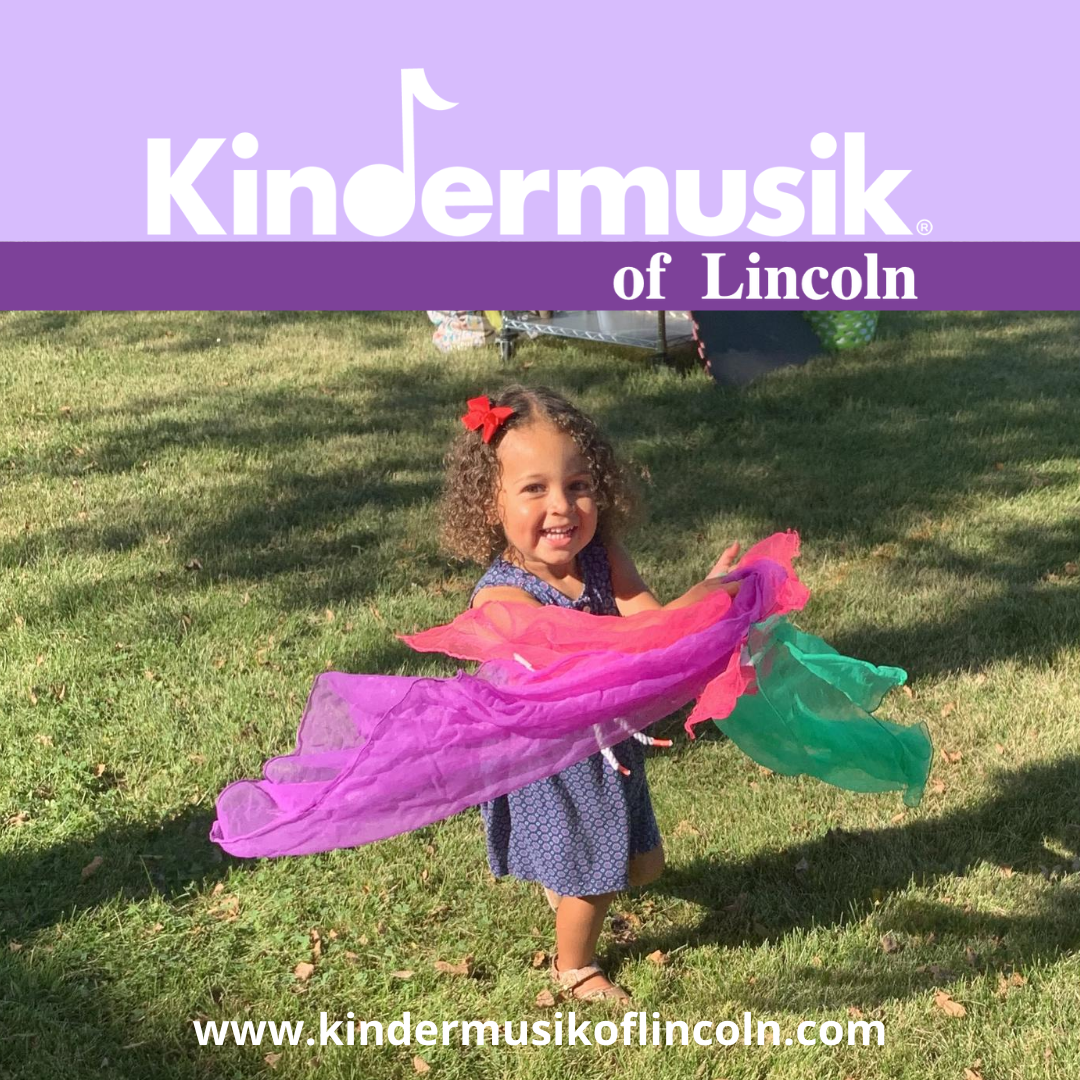
It’s that time again! Time to go barefoot in the grass, cheeks kissed by the sun and of course, Kindermusik Camps and Classes! This summer the youngest kids will be able to experience Beach Days, 3-6 year old kids will be playing pirates with Make Believe during Art & Music, and then our most popular camps ever, Jr. and Master Chef are making a return (Jr. Chef is for children 3- 6 years of age, Master Chef is for children 5-9 years old)!!!
The fun and learning begin the week of June 20, 2021 and will run six weeks. Camps/classes are being held on Tuesdays, Wednesdays, Fridays, and Saturdays. There will be a break the week of July 4-July 10.
The goal is to be outdoors as long as the weather cooperates and if it doesn’t, we will be inside in our normal classroom. The outdoor component is something fairly new to the Kindermusik of Lincoln Studio, and while we can’t count many good things to come out of the pandemic, learning to be a more flexible and outdoor embracing studio has been one of them.
So what are you waiting for? Some classes are already full at the time of this post, and others are nearing capacity. Don’t miss out on this opportunity to learn, sing, dance, play, socialize, imagine and just be with one another!
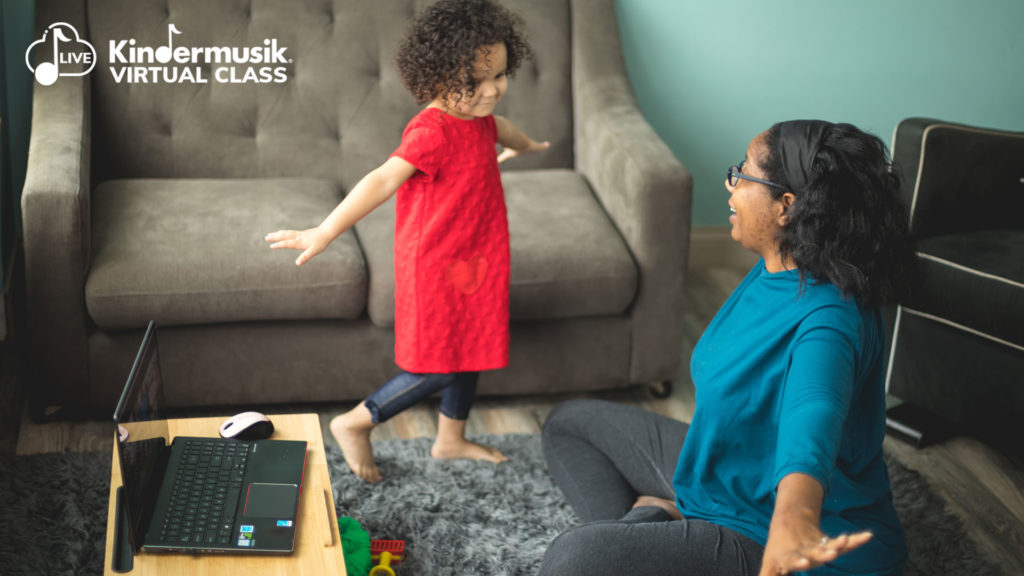
Great news!!!! Kindermusik International has embraced the current need for social distancing and has created means for all Kindermusik Educators to continue to offer their award winning curriculum in virtual classrooms! This means that while we may be going through a time where group activities are not allowed, we don’t have to stop making music! In fact, we can make as much music as before or even more!!!
Kindermusik of Lincoln has gone to online LIVE virtual classes until we can safely meet in the studio once again. Obviously, there is not a hard and fast date as to when that will be, as we want to make sure that we make that decision based on the best and most reliable data available.
You can still sign up for Kindermusik classes. They are unlimited within the age group for which you enroll. There is a sibling discount available, and we are bringing back the REFERRAL DISCOUNT TOO!
So to stay sane, provide predictable and trusted learning and movement opportunities for your children, and feel good about supporting a local business, ENROLL NOW!